








|
Getting your Trinity Audio player ready...
|
Table of Contents
Technology doesn’t wait for anyone. Yet many businesses are still running on systems built for a very different digital era.
At first, legacy platforms feel reliable. They’ve supported operations for years. But over time, they quietly become barriers that result in slow innovation, increasing operational costs, limiting scalability, and making it harder to respond to market demands. What once powered growth now holds it back.
This is exactly why legacy application modernization has shifted from a technical upgrade to a business imperative. As per the report by MarketsandMarkets, the application modernization services market is expected to reach $39.62 billion by 2029.
Modern organizations need systems that move as fast as their customers, data, and competition. Legacy system modernization provides that opportunity. It allows companies to transform aging infrastructure into flexible, secure, and future-ready platforms that support innovation rather than restrict it. It’s a strategic transformation that blends technology, business objectives, and long-term vision.
When done right, modernization unlocks operational efficiency, strengthens security, improves user experiences, and creates room for digital growth.
In this blog, we will cover the benefits, strategies, and everything you need to know to approach legacy modernization with confidence. Before discussing legacy software modernization, let’s have a brief introduction to legacy applications.
What are Legacy Applications?
Before organizations can modernize legacy systems, they must first recognize what defines a legacy application and why it becomes a barrier to growth over time.
Legacy applications are long-standing systems that continue to run critical business processes but are built on technologies that no longer align with today’s digital standards. While they may still function, they often introduce hidden risks and operational inefficiencies.
Here are the most common characteristics of legacy applications:
Outdated technology: These systems are typically developed using older tools, frameworks, and architectures. As technology evolves, this makes them incompatible with modern platforms, integrations, and best practices, limiting innovation and digital adoption.
Inefficient performance: Legacy applications often struggle with slow response times and processing delays, directly impacting productivity and user experience across the organization.
Security vulnerabilities: With limited updates and aging security controls, legacy systems are more exposed to cyber threats, compliance risks, and data breaches.
High maintenance costs: Supporting older applications requires specialized expertise and continuous fixes, driving up operational expenses while delivering diminishing returns.
Limited scalability: As business demands grow, scaling these systems becomes complex and costly, turning expansion into a technical challenge rather than a strategic opportunity.
Poor adaptability: Legacy platforms are rarely designed for rapid change. Many rely on tightly coupled, poorly documented code, creating knowledge silos. When experienced employees leave, critical system understanding goes with them, making enhancements difficult and slowing progress.
What Is Legacy Software/Application Modernization?
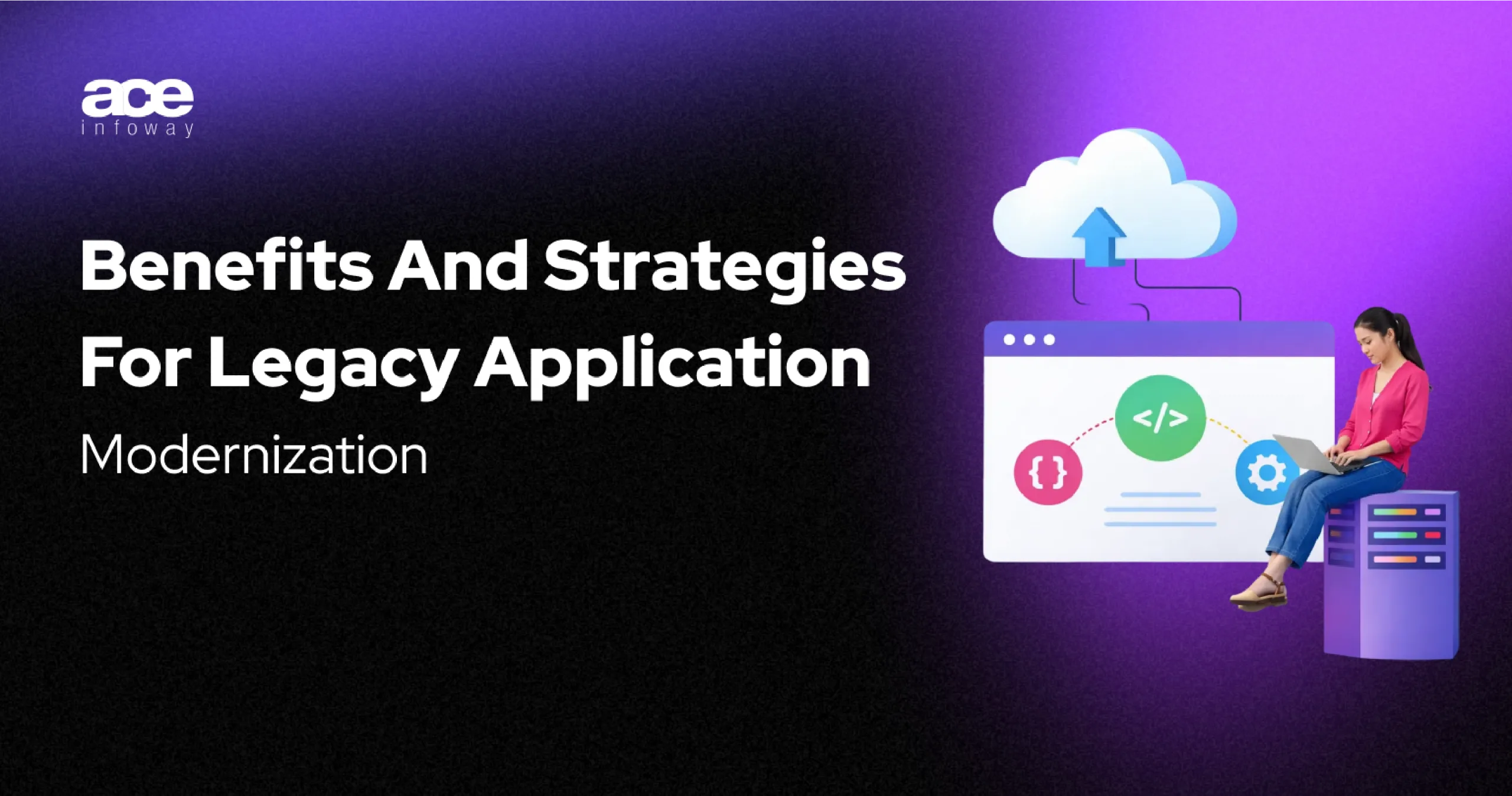
Legacy application modernization is the process of transforming aging software so it aligns with today’s digital technologies, business expectations, and customer demands. Instead of allowing outdated systems to slow progress, modernization repositions them as agile, secure, and scalable platforms that actively support growth.
At its core, modernization involves refreshing legacy codebases, adopting modern frameworks, and moving applications from traditional on-premise environments to cloud-based infrastructures. In many cases, it also includes legacy system migration, shifting workloads to more flexible platforms that enable faster innovation and easier maintenance.
With the right legacy application modernization approach, organizations gain the ability to respond quickly to market shifts, integrate emerging technologies, and deliver better digital experiences.
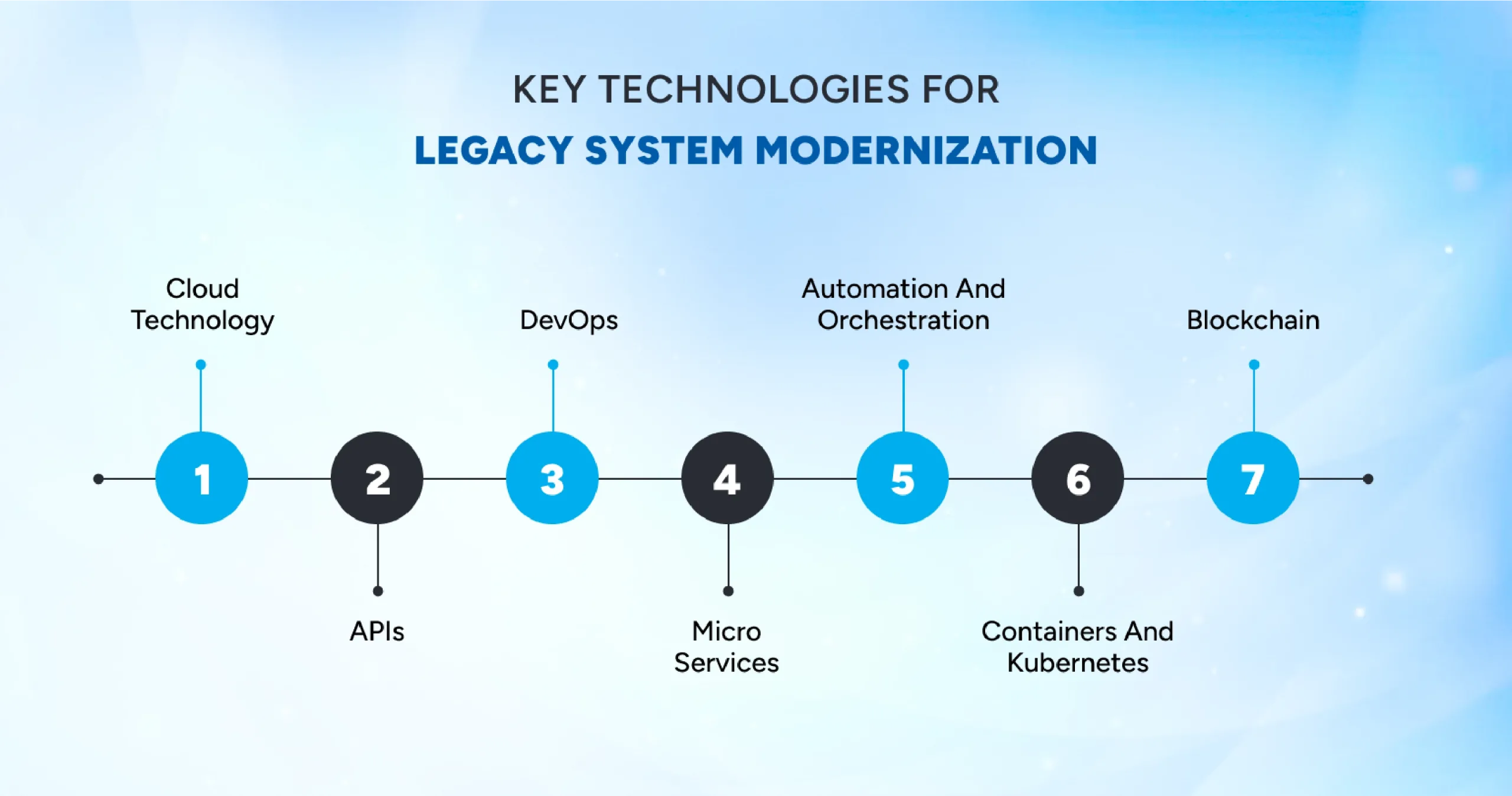
Below are some of the key technologies that enable successful legacy application modernization:
Cloud technology: Migrating legacy systems to public, private, or hybrid cloud environments unlocks scalability, agility, and cost efficiency. Cloud platforms provide the foundation needed to deploy, manage, and grow modern applications without infrastructure constraints.
APIs: Application Programming Interfaces enable smooth data exchange between modernized applications and existing systems, improving connectivity while supporting phased modernization.
DevOps: DevOps practices introduce automation and continuous delivery, helping teams release updates faster, improve reliability, and shorten development cycles.
Microservices: By breaking monolithic applications into smaller, independent services, microservices enhance flexibility. Each component can be updated or scaled without disrupting the entire system.
Automation and orchestration: Automation handles repetitive operational tasks, while orchestration coordinates them into streamlined workflows, accelerating deployment, scaling, security, and network management across environments.
Containers and Kubernetes: Containers offer lightweight, portable application deployment, making them ideal for hybrid and multi-cloud strategies. Kubernetes manages these containers at scale, maximizing portability, resilience, and operational efficiency.
Blockchain: With built-in security, traceability, and immutability, blockchain strengthens modernized applications, particularly in areas like payments, supply chain management, healthcare, real estate, and digital rights protection.
With the right legacy application modernization approach, organizations gain the ability to respond quickly to market shifts, integrate emerging technologies, and deliver better digital experiences. For many businesses, this becomes the foundation of their larger Digital Transformation journey.
Benefits of Legacy Application Modernization
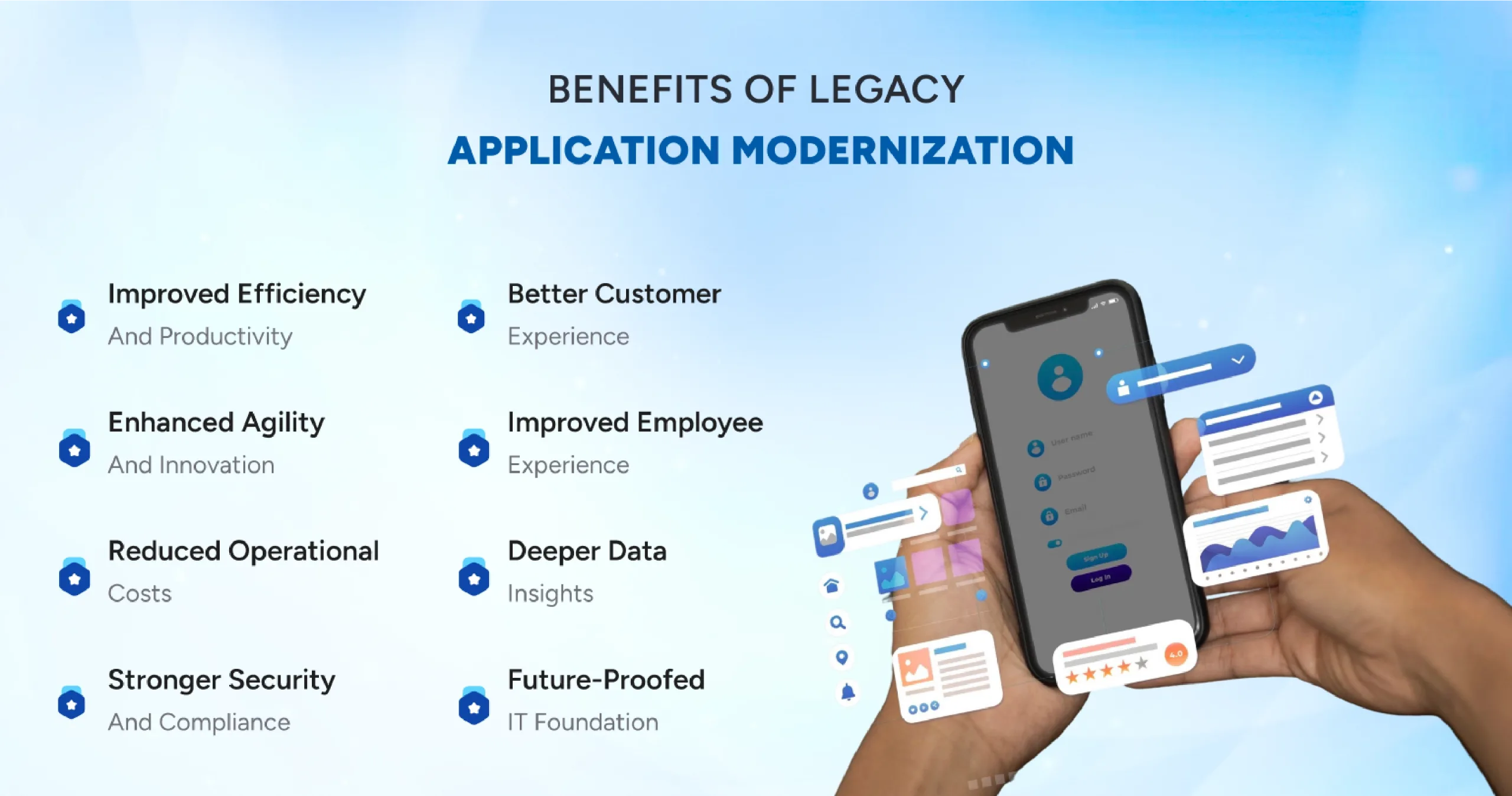
Legacy modernization is a strategic shift that reshapes how your entire organization operates. When executed thoughtfully, legacy application modernization delivers measurable value across productivity, innovation, security, and customer experience.
Here are the key benefits organizations gain when they choose to modernize:
Improved efficiency and productivity
Modernized platforms remove operational friction by streamlining workflows, automating repetitive tasks, and eliminating performance bottlenecks. Faster response times and fewer errors help teams work smarter, not harder. With modular architectures in place, employees spend less time managing systems and more time on high-impact work. Onboarding also becomes easier, while optimized resource utilization leads to meaningful cost savings.
Enhanced agility and innovation
Traditional systems are rigid by design. Modern architectures are not. Through legacy system migration and modular development, businesses gain the flexibility to adapt quickly, integrate emerging technologies, and scale without disruption. This agility fuels faster experimentation, accelerates product releases, and keeps organizations competitive in rapidly changing markets.
Reduced operational costs
Maintaining aging infrastructure comes with rising expenses, with obsolete hardware, costly licenses, and scarce technical expertise. Legacy software modernization replaces these burdens with cloud-based platforms, open-source tools, and standardized technologies. The result is lower long-term infrastructure costs, simplified maintenance, and a more predictable IT spend.
Stronger security and compliance
Outdated systems often lack modern safeguards, making them vulnerable to cyber threats and regulatory risks. Modernized applications adopt current security frameworks, encryption standards, and continuous patching practices. By reducing exposure to breaches and compliance violations, organizations protect sensitive data, preserve customer trust, and avoid costly penalties.
Better customer experience
Modern platforms enable seamless, personalized, and omnichannel interactions. With integrated data and loosely coupled services, businesses can tailor experiences to individual preferences while delivering faster service. This leads to higher satisfaction, stronger loyalty, and increased revenue, all driven by systems designed for today’s digital expectations.
Improved employee experience
When companies modernize legacy systems, developers and architects gain access to cleaner codebases and contemporary tools that are easier to maintain and scale. Knowledge is no longer trapped with a few specialists, making collaboration smoother and development more inclusive. As an added advantage, working with modern technology stacks also helps attract and retain top technical talent.
Deeper data insights
Legacy platforms often lock information in silos. Modernized systems enable unified data access and advanced analytics, empowering leaders to make informed, data-driven decisions. These insights drive innovation, optimize operations, and create a competitive edge.
Future-proofed IT foundation
Modernization aligns your technology stack with current and emerging innovations, ensuring your infrastructure doesn’t become obsolete. It builds a resilient foundation for continuous improvement, allowing organizations to stay ahead of change rather than react to it.
These outcomes are not just theoretical, as many organizations have already achieved measurable improvements through initiatives like Re-development Web Portal and Mobile Applications, where modernization directly translated into better user engagement and operational efficiency.
What Factors Drive Legacy Application Modernization?
Legacy modernization rarely starts with technology alone; it starts with pressure.
Pressure from customers who expect seamless digital experiences. Pressure from teams struggling with slow systems. And pressure from leadership to reduce risk while accelerating growth. Together, these forces make modernization a strategic necessity rather than a discretionary upgrade.
Choosing the Right Path to Legacy System Transformation
There’s no universal playbook for modernization.
Every organization operates on a unique mix of infrastructure, applications, and business priorities. That’s why successful legacy system modernization starts with understanding what you already have and what you need to achieve.
Before selecting a modernization approach, it’s essential to evaluate the core components of your existing software ecosystem:
- Hardware infrastructure: Bare-metal servers, on-premise virtualized environments, cloud platforms, or hybrid setups.
- Runtime environment: Web servers, application servers, and database servers that support daily operations.
- Development frameworks: Web frameworks, business logic layers, messaging systems, and database frameworks.
- Business logic: Core functionality written in languages such as Java, .NET, or similar technologies.
The modernization strategy you choose depends on system complexity, business goals, budget constraints, and risk tolerance. In many cases, multiple components need to evolve together, making legacy software modernization a tailored journey rather than a one-size-fits-all exercise.
Below are the most common legacy modernization strategies and approaches organizations use:
Encapsulation
This approach wraps existing applications with APIs or interfaces, enabling integration with modern platforms without changing core legacy code. It’s a low-risk way to achieve quick integration benefits while extending the life of existing systems.
Rehosting
Often called “lift and shift,” rehosting focuses on legacy system migration to newer environments, typically the cloud, while keeping the application largely unchanged. This delivers fast infrastructure improvements and better scalability with minimal code disruption.
Replatforming
Similar to rehosting, but with selective code modifications to take advantage of new platform features. Replatforming works well for applications that need modest optimization without full architectural changes.
Refactoring
Refactoring restructures existing code to improve performance, maintainability, and testability without altering external functionality. It’s more involved than encapsulation but avoids the risk and cost of a complete rebuild.
Rearchitecting
This strategy redesigns application architecture to embrace modern design patterns and technologies. While more complex, it unlocks major gains in agility, scalability, and system resilience.
Rebuilding or replacing
The most comprehensive option involves creating a new system from scratch or replacing the legacy platform entirely. Although time-intensive and costly, it offers maximum flexibility and innovation potential.
Hybrid approach
Many organizations blend multiple strategies that follow encapsulating some components, rehosting others, and refactoring or rearchitecting critical modules. This balanced approach allows teams to modernize incrementally while managing risk.
Choosing the right modernization path requires deep technical insight and close alignment with business objectives.
Conclusion
Organizations that act early gain clarity, speed, and resilience, while those that delay risk falling behind in a market that rewards adaptability. The real value lies in building systems that support tomorrow’s ambitions, not yesterday’s processes.
As a trusted digital solution company, Ace Infoway combines deep technical expertise with business-first thinking to deliver tailored modernization journeys. Whether you’re planning legacy application modernization or large-scale legacy system migration, our team ensures measurable outcomes with minimal disruption. Contact us to know more about how we can assist you in a successful legacy system modernization aligned with your business objectives and challenges.
FAQ
What is the first step before starting legacy system migration?
Start with a comprehensive application assessment. This includes evaluating performance, dependencies, security risks, and business impact. A clear roadmap helps prioritize workloads and ensures migration aligns with business goals.
Can modernization be done without disrupting daily operations?
Yes. Most organizations adopt incremental modernization using hybrid or phased approaches. This allows teams to modernize legacy systems gradually while keeping critical business functions running smoothly.
Is cloud adoption mandatory for legacy application modernization?
Not always. While cloud accelerates scalability and agility, some organizations choose hybrid or on-prem models. The right approach depends on compliance needs, workload sensitivity, and long-term digital strategy.
What role does data play in modernization projects?
Data is central. Successful modernization ensures clean migration, better integration, and advanced analytics. Modern platforms unlock real-time insights, helping businesses make smarter, faster decisions.
What risks are involved in legacy system migration?
Risks may include data loss, downtime, or integration challenges. These can be minimized with proper planning, testing, and experienced partners who follow proven migration frameworks.