








|
Getting your Trinity Audio player ready...
|
Table of Contents
Your application may be functional today, but is it ready for tomorrow’s growth?
As user expectations increase, businesses are dealing with common challenges such as slow-running applications, launching new features, and expensive maintenance with growing complexity.
A delay of just a few seconds in application response time can impact user experience, engagement, and conversions. For that reason, organizations are moving beyond traditional application infrastructure and investing in scalable cloud-powered solutions.
Modern cloud application development services help businesses build applications that can automatically scale, process workloads efficiently, and deliver consistent performance across devices and locations.
The shift toward the cloud is accelerating rapidly. According to Gartner, worldwide public cloud spending is expected to reach $723.4 billion in 2025, highlighting how organizations are accelerating cloud adoption to improve scalability, operational efficiency, and digital agility.
What Are Cloud Application Development Services?
Cloud application development services involve designing, developing, deploying, and managing applications that run on cloud infrastructure instead of traditional on-premises environments.
Unlike conventional applications that depend heavily on fixed servers and manual scaling, cloud applications use distributed computing models to deliver improved availability, faster processing, and flexible resource allocation.
A typical cloud application development approach includes:
- Cloud-native application architecture
- API-driven development
- Microservices-based architecture
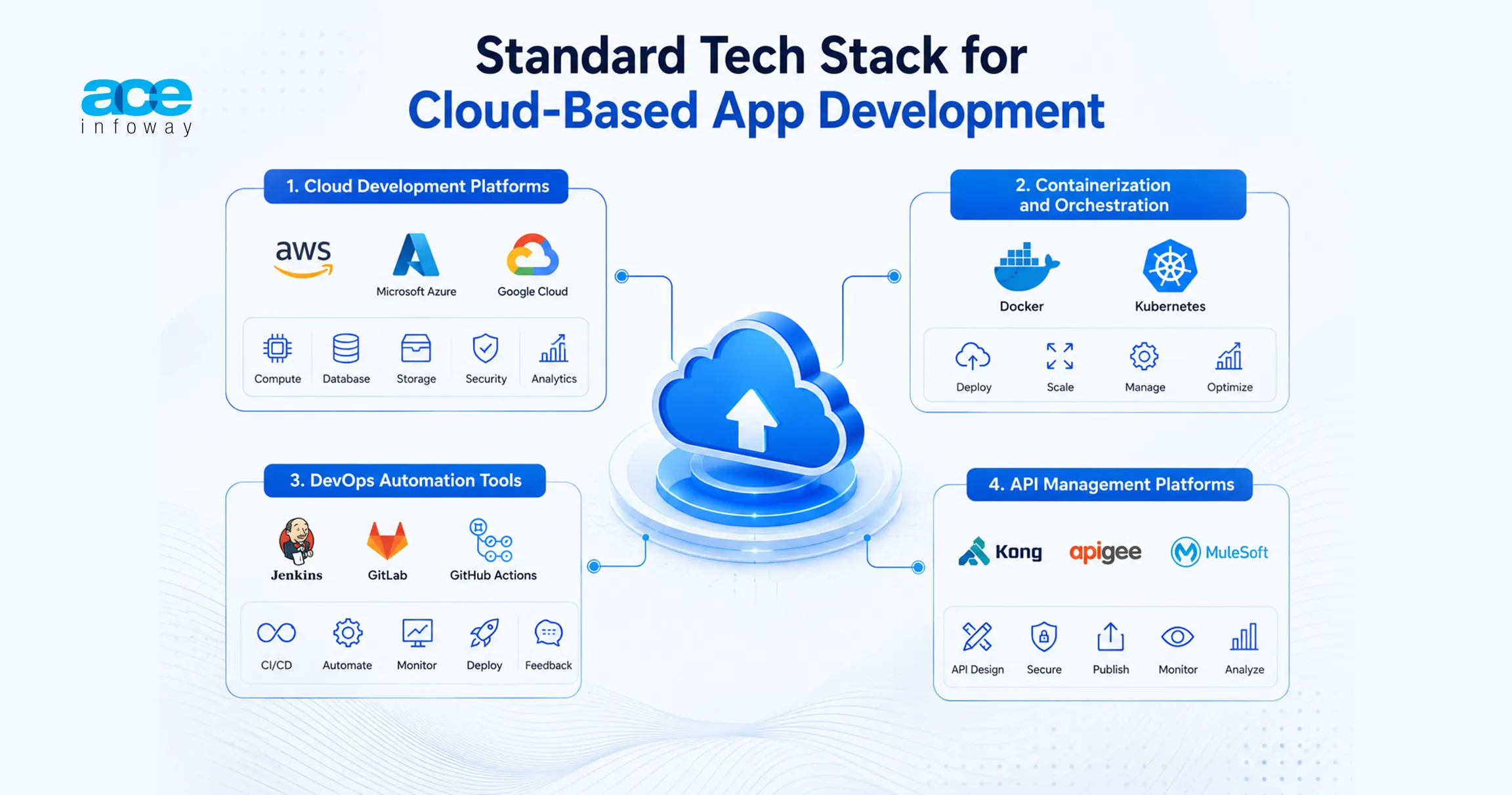
- Containerization using technologies like Docker and Kubernetes
- Automated deployment pipelines
- Cloud database management
- Infrastructure monitoring and optimization
Cloud applications can be developed using platforms such as:
- Amazon Web Services (AWS)
- Microsoft Azure
- Google Cloud
These platforms provide computing power, storage, security frameworks, analytics capabilities, and automation tools required to build scalable digital solutions.
Why Are Businesses Investing in Cloud-Based App Development?
Customer expectations around digital experiences continue to increase. Applications must load faster, handle unpredictable traffic, integrate with multiple systems, and provide uninterrupted availability.
Traditional applications often create limitations such as:
- Fixed infrastructure capacity
- Slow deployment cycles
- Higher maintenance requirements
- Limited scalability during peak demand
- Performance issues caused by resource constraints
With cloud-based app development, businesses can build applications that dynamically allocate resources based on real-time requirements.
For example, an eCommerce platform experiencing seasonal traffic spikes can automatically scale computing resources during high-demand periods and reduce them when demand decreases.
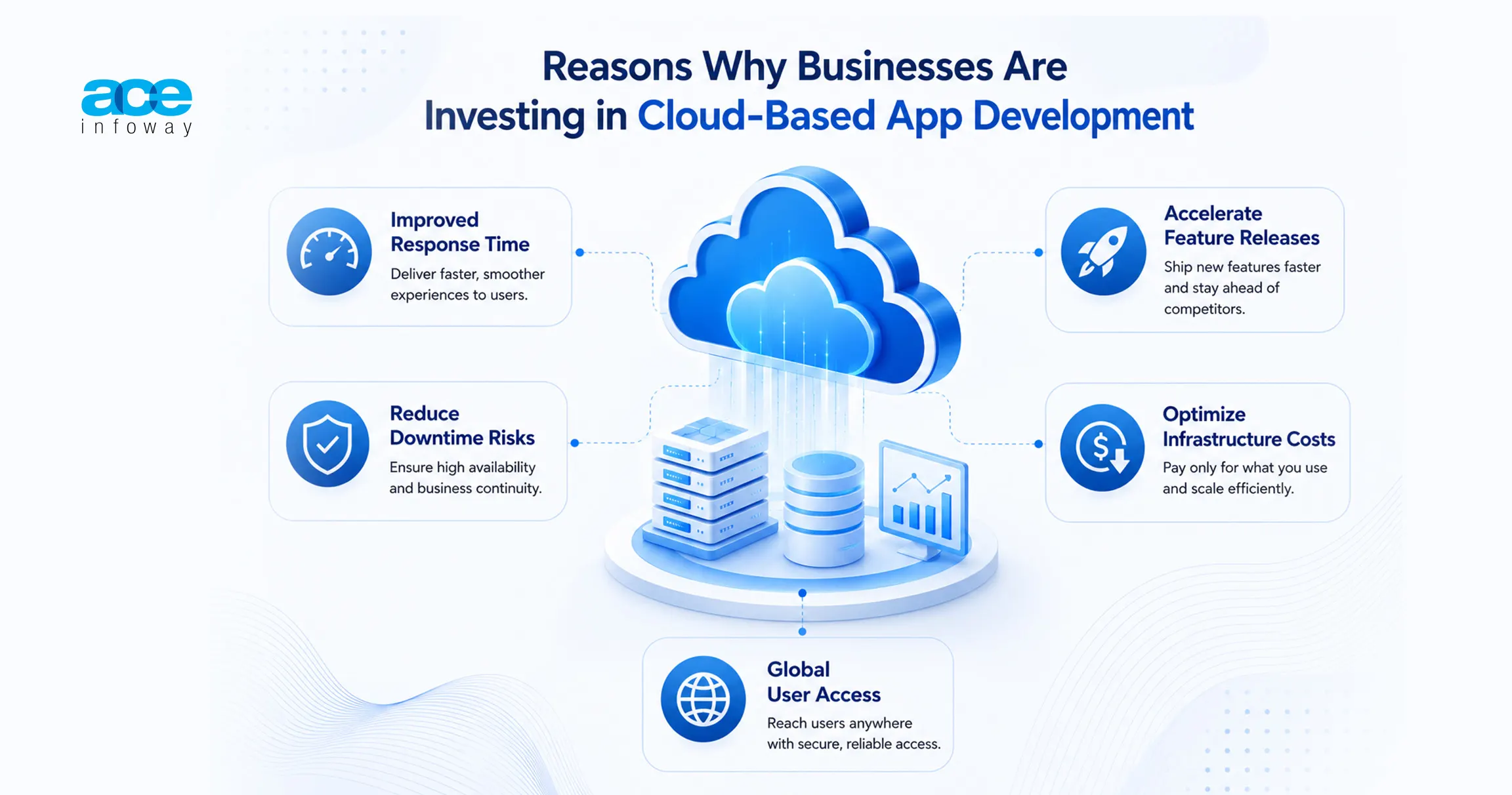
This capability helps businesses:
- Improve application response time
- Reduce downtime risks
- Support global user access
- Accelerate feature releases
- Optimize infrastructure costs
A cloud-first approach also enables organizations to adopt modern development practices such as continuous integration and continuous delivery (CI/CD), helping teams release improvements faster.
Cloud Application Development Software: Technologies Behind High-Performance Applications
Modern cloud application development software provides the frameworks, platforms, and tools required to create, test, deploy, and maintain cloud applications efficiently.
These solutions support developers across the complete application lifecycle.
Key components of cloud-based app development are listed below.
Cloud Development Platforms
Cloud platforms provide the infrastructure required to host applications, manage workloads, and scale resources automatically.
Popular cloud development environments support:
- Virtual machines
- Serverless computing
- Managed databases
- Storage solutions
- AI and analytics services
Containerization and Orchestration
Containerization enables applications to run consistently across different computing environments by packaging application code, dependencies, and configurations together. It improves deployment reliability while allowing teams to manage complex cloud workloads efficiently.
Technologies like Kubernetes help manage:
- Automated deployment
- Application scaling
- Resource optimization
- Service availability
DevOps Automation Tools
DevOps automation tools connect development and operations processes to create faster and more reliable software delivery workflows. By reducing manual tasks and introducing continuous integration and deployment practices, teams can release application updates more frequently while maintaining quality.
This enables:
- Faster testing cycles
- Automated deployment
- Continuous monitoring
- Faster issue resolution
API Management Platforms
API management platforms help applications securely connect with internal systems, third-party services, and external platforms for efficient data exchange.
API management helps businesses improve:
- Integration efficiency
- Security controls
- Data exchange reliability

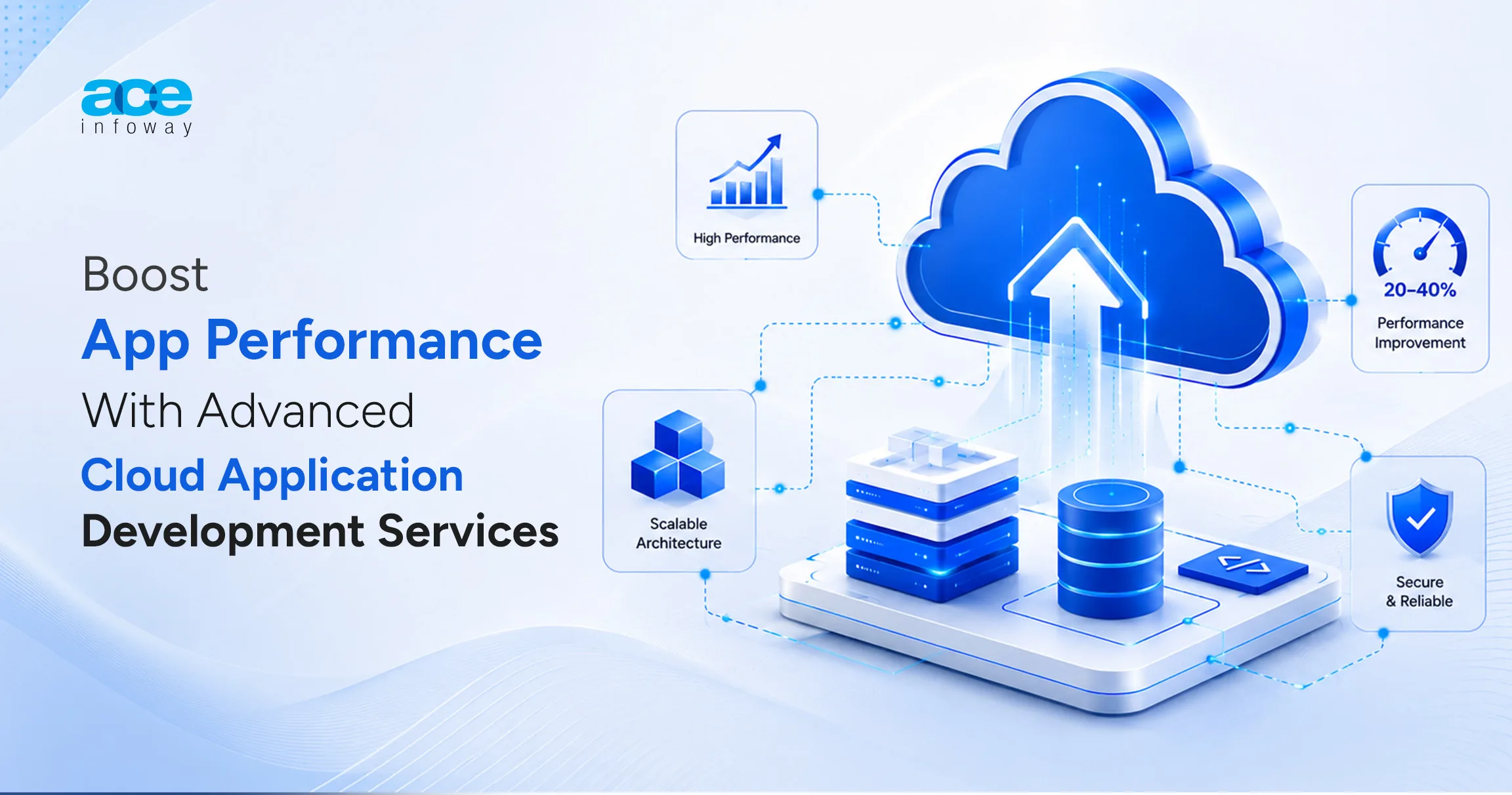
How Does Cloud-Based Software Development Improve Application Performance by 20–40%?
The performance improvement achieved through cloud-based software development depends on application architecture, optimization strategy, infrastructure design, and workload requirements.
Businesses commonly achieve significant performance improvements by implementing:
1. Auto Scaling Infrastructure
Cloud environments automatically adjust computing resources based on application demand.
Instead of maintaining excess infrastructure capacity, businesses can dynamically allocate resources during high-traffic periods.
Benefits are:
- Faster response times
- Better resource utilization
- Improved user experience
2. Distributed Cloud Architecture
Distributed cloud architecture spreads application workloads across multiple servers and locations to improve reliability, availability, and user experience.
This reduces dependency on a single infrastructure point and improves:
- Application availability
- Processing speed
- Geographic performance
3. Optimized Database Performance
Cloud database optimization improves application speed by reducing data access delays and managing high-volume transactions efficiently.
Cloud-based architectures improve performance through:
- Database caching
- Managed database services
- Query optimization
- Data replication
4. Continuous Performance Monitoring
Continuous monitoring provides real-time insights into application behavior, infrastructure health, and user experience. By tracking performance metrics, businesses can identify potential issues early and optimize applications before problems affect customers.
Cloud monitoring tools provide real-time visibility into:
- Application response time
- Server performance
- User activity
- Resource consumption
Teams can identify performance issues before they impact customers.
Technical Architecture Behind Modern Cloud Applications
Successful cloud application development services require a well-designed architecture that supports scalability and reliability.
A typical cloud application architecture consists of:
Front-End Layer
The front-end layer manages how users interact with the application and directly impacts user experience, responsiveness, and accessibility. Modern cloud applications use flexible front-end technologies that support dynamic interfaces across web and mobile platforms.
Common technologies are:
- React
- Angular
- Vue.js
- Mobile frameworks
Application Layer
The application layer manages business logic, workflows, and communication between different application components.
Common approaches:
- Microservices architecture
- API-first development
- Serverless functions
Data Layer
The data layer manages storage, processing, and analysis of application information. Cloud-based data solutions help businesses handle increasing data volumes while improving accessibility, reliability, and performance.
Components of the data layer are:
- Cloud databases
- Data warehouses
- Data processing systems
Infrastructure Layer
The infrastructure layer provides the computing, networking, and operational resources required to run cloud applications efficiently. Cloud platforms enable businesses to manage infrastructure dynamically while supporting high availability and scalability.
Infrastructure later consists of:
- Virtual machines
- Containers
- Load balancing
- Networking
This layered approach enables applications to scale independently and maintain consistent performance.
How Does Cloud Application Development Software Support Scalable Enterprise Applications?
Enterprise applications need to handle increasing users, complex workflows, and growing data requirements without impacting performance. Modern cloud application development software enables organizations to build applications that can scale horizontally and vertically while maintaining reliability.
Unlike traditional software environments where scaling often requires manual infrastructure upgrades, cloud-based platforms provide flexible resource management through automation.
Key capabilities include:
Serverless Application Development
Serverless architecture allows businesses to run application functions without managing underlying servers.
Benefits:
- Automatic scaling based on demand
- Reduced infrastructure management
- Faster application deployment
- Optimized resource consumption
Serverless models are commonly used for:
- Event-driven applications
- API-based systems
- Real-time processing workflows
Microservices-Based Application Architecture
Modern cloud applications often use microservices to divide complex applications into smaller, independent services.
This approach allows teams to:
- Deploy individual features faster
- Scale-specific application components
- Improve fault isolation
- Simplify application maintenance
For example, an eCommerce platform can independently scale its payment service, product catalog, and customer management modules based on usage patterns.
Cloud-Native Application Monitoring
Performance monitoring is essential for maintaining application reliability.
Cloud monitoring solutions help track:
- Application latency
- API performance
- Infrastructure usage
- Error rates
- User experience metrics
By identifying performance issues early, businesses can continuously improve application speed and stability.
Cloud-Based App Development Trends Shaping Future Digital Platforms
The future of cloud-based app development is moving toward intelligent, automated, and highly connected digital ecosystems.
Businesses are increasingly adopting cloud technologies to improve operational agility and deliver personalized customer experiences.
Some key trends influencing cloud application development are:
AI-Powered Cloud Applications
Artificial intelligence is becoming a core component of modern cloud solutions.
Cloud-based AI capabilities help businesses implement:
- Predictive analytics
- Intelligent automation
- Recommendation engines
- Customer behavior insights
By integrating AI services into applications, businesses can create smarter workflows and more personalized experiences.
Multi-Cloud and Hybrid Cloud Adoption
Organizations are increasingly adopting multiple cloud environments to improve flexibility and reduce dependency on a single provider.
Hybrid and multi-cloud strategies help businesses:
- Optimize workload placement
- Improve disaster recovery
- Meet compliance requirements
- Improve infrastructure resilience
Low-Code and Faster Application Delivery
Low-code development platforms are helping organizations accelerate application creation while maintaining enterprise-level capabilities.
These platforms support:
- Rapid prototyping
- Workflow automation
- Faster business application delivery
Edge Computing Integration
As applications require faster response times, edge computing helps process data closer to users.
This improves:
- Real-time application performance
- IoT application responsiveness
- Data processing speed
According to Gartner, cloud-native platforms and distributed computing approaches continue to influence enterprise technology strategies as organizations focus on scalability, agility, and digital innovation.
Cloud-Based Software Development Approach We Follow
At Ace Infoway, our cloud-based software development approach focuses on creating applications that align technology with business objectives.
Our development process includes:
Cloud Strategy Planning
We analyze:
- Business requirements
- Existing infrastructure
- Application goals
- Scalability requirements
Application Development & Modernization
We build new cloud applications and modernize existing systems through:
- Cloud migration
- Architecture redesign
- API development
- Performance optimization
Cloud Integration
Modern businesses operate with multiple platforms.
We help integrate:
- ERP systems
- CRM platforms
- Payment solutions
- Data platforms
- Third-party applications
Testing & Optimization
Before deployment, applications undergo:
- Performance testing
- Security testing
- Load testing
- Compatibility validation
Security and Reliability Practices in Cloud Application Development
Security remains a critical component of cloud application development. IBM’s Cost of a Data Breach Report found that the global average cost of a data breach reached $4.88 million, reinforcing the need for secure cloud architectures and proactive monitoring.
A secure cloud application includes:
- Identity and access management
- Data encryption
- Secure API communication
- Regular vulnerability testing
- Compliance-focused architecture
Cloud providers also offer built-in security capabilities that help businesses protect applications and data at scale.
Business Benefits of Cloud Application Development Services
Investing in cloud application development services helps organizations achieve measurable improvements across technology and operations.
- Faster Application Performance: Cloud-native architecture reduces performance bottlenecks and improves user experience.
- Improved Scalability: Applications can handle changing workloads without major infrastructure changes.
- Reduced Operational Complexity: Managed cloud services reduce infrastructure management requirements.
- Faster Innovation Cycles: Development teams can release updates faster through automation and DevOps practices.
- Better Customer Experience: Reliable and responsive applications improve engagement and retention.
Why Choose Ace Infoway for Cloud Application Development Services?
Building successful cloud applications requires more than selecting a cloud platform. It requires technical expertise, architecture planning, and a deep understanding of business workflows.
Ace Infoway helps organizations build scalable applications through:
- Cloud-native application development
- Enterprise application modernization
- API-driven architecture
- Cloud integration services
- Performance optimization
- DevOps implementation
Our cloud application development services focus on creating applications that support business growth, improve operational efficiency, and deliver consistent digital experiences.
Conclusion
Cloud adoption is about creating flexible digital systems that can respond faster to customers, market changes, and business growth.
A well-designed cloud-based app development strategy helps organizations improve application performance, strengthen reliability, and build applications ready for future demands.
With expertise in cloud architecture, application modernization, and scalable engineering practices, Ace Infoway helps businesses transform ideas into high-performing cloud solutions. To explore how our cloud expertise can support your business goals, contact us and start building your next-generation application platform.